
https://going-human-api.onrender.com/api/v1/images/posts/ep02_image-0b722de9.png
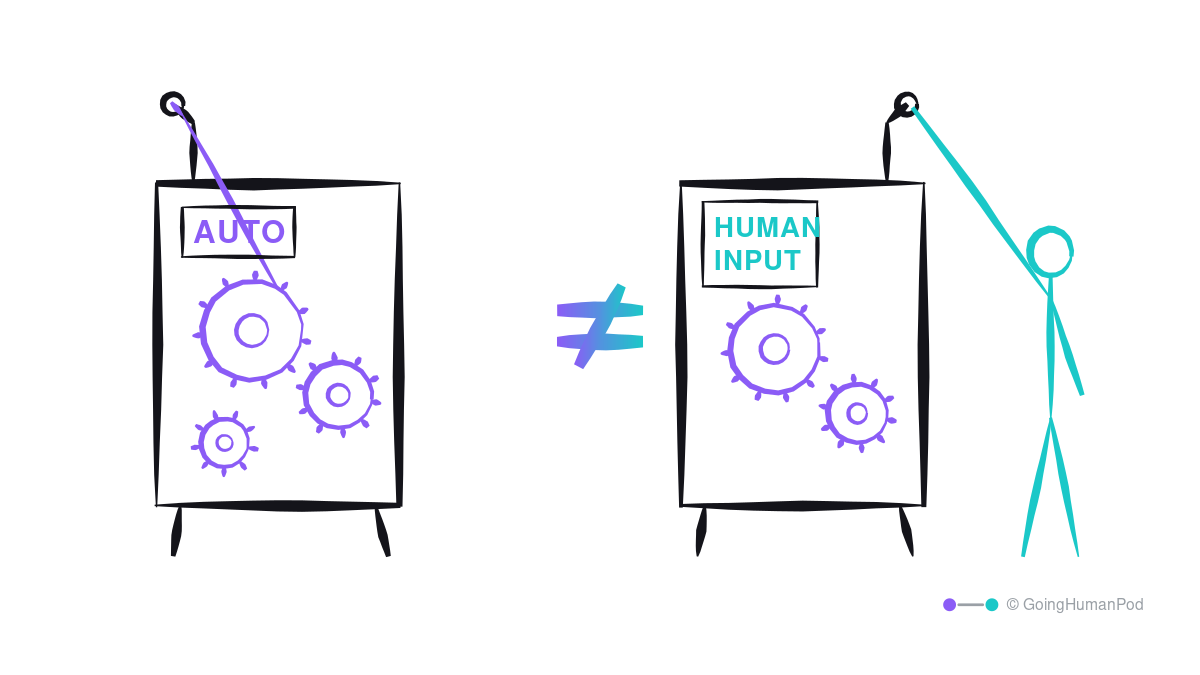
Put yourself in the room. An elderly woman comes in by ambulance, unconscious, her blood pressure crashing. The triage nurse hooks her up, and the second the monitors catch her, the screen lights up: sepsis, sepsis, sepsis. The charge nurse does exactly what she is trained to do. Bed, fluids, stat. The textbook move.
But the nurse at the bedside, the one who was there when the gurney rolled in and has not left her side, is actually looking at the patient instead of the screen. And he sees a dialysis catheter tucked under her collarbone. This woman's kidneys are failing. A flood of IV fluid has nowhere to go. It will back up into her lungs and drown her. He says no. The alarm says do it. He still says no. A doctor overhears the argument, steps in, orders a different drug that lifts her pressure without the flood, and she lives.
Sit with that one second longer than is comfortable. The machine was certain. The nurse was right. And the only reason that woman is alive is that a human being in the room refused to do what the system told him to do.
I do not measure AI by what it can do. I measure what it does to the human on the other end. And today the machine reached for a job that used to belong to a person. Not reading your body in a mirror, but running the system that is supposed to keep you alive, and quietly deciding it no longer needs the soul that used to run it.
I learned why that matters at the kitchen table. My mother raised six of us. I am the youngest. When I was eleven she went back to school, became an RN, and then spent thirty-six years as the nurse in my father's OBGYN practice. She told me a thing once that I have never been able to unhear: if you want a fringe diagnosis, see the doctor. If you want good care, see the nurse. She is right, and it is the whole story. The doctor parachutes in for the big moment. The nurse is there the entire time, watching every contraction, every number, every flicker of panic in the eye. Her authority is not the diploma. It is that she never looks away. The nurse stays until the head crowns. The machine just takes a sample.
So let me tell you what overruled that bedside nurse. It is called the Epic Sepsis Model, and it rides inside the software that runs the medical record in most American hospitals. It sounds like progress. It is also, by the math, a coin flip. When researchers at Michigan Medicine checked it against more than 38,000 hospital stays and published the result in JAMA Internal Medicine, it missed two out of every three real sepsis cases, and it cried wolf so often that it became background noise. A 33 percent model is not a flawed tool. It is a coin flip in a lab coat. And nobody with a brain bets a life on a coin flip.
Here is the move that should bother you. The system did not offer a second opinion. It gave an order, with the full weight of the institution behind it, and it made the human the one who had to find the nerve to say no.
I have sat in the rooms where you decide what to automate, and there is a rule the people who shipped this thing forgot. You do not automate by how often the machine is right. You automate by what it costs when it is wrong. If the line glitches and two widgets fall on the floor, who cares, sweep them up. If the line glitches and a worker's arm is in the machine, you do not automate it, not ever, not for any efficiency number on earth. You automate the stray widget. You never automate the severed arm. Sepsis is a severed-arm decision that somebody dressed up as a stray-widget convenience and shipped.
And the same systems that miss the sick have started to invent the well. AI scribes now sit in the exam room and write the visit note straight into your chart, and sometimes they make things up. They have documented entire physical exams that never happened, findings no one observed, on real patients. Read the fine print and the vendor does not hold the liability. The human who signs it does. The machine misses the sick, then it invents the well, and both times the only thing standing between you and the mistake is a human who actually knows you.
I am not anti-machine. Point this technology at the right target and it is a genuine miracle. An algorithm watching a flood of patients can catch the one quietly crashing that a swamped human misses, and in real hospitals it has saved real lives. The scale has two pans, like always. Point it at the wrong target, hand it authority it never earned, take the witness out of the room, and it is a confident coin flip giving orders. The fix is not smarter machines. The fix is keeping a soul in the system, a human who never looks away, who is allowed to say no, and who is trusted when they do.
That is why I needed to talk to Jen Clifford. Jen has spent twenty-three years in healthcare IT, eleven of them running the Epic teams that build the very systems we have been talking about, the workflows, the clinical content, the screens a nurse stares at all shift. She is the modern version of that bedside nurse, the continuous witness, except her floor is the software itself. She knows exactly where the human judgment is buried in the system, and what it costs when somebody paves over it. And she said the quiet part plainly. She wants the provider to validate what the machine heard before it gets logged in her record forever, because a wrong diagnosis is brutally hard to undo. The machine, she agrees, can have the busywork. It can never have the authority to overrule the person who is actually watching the patient.
So here is the one human thing, and if enough of us do it, it stops being small. This week, do one thing by hand that you would normally let a machine decide for you. Add it up yourself. Make the call yourself. Read the room yourself. And notice what you catch that the machine would have missed. That feeling is your judgment. Do not let anything talk you out of it.
A nurse beat a system that runs half the hospitals in this country, because he was present and he trusted himself. You have that same instrument. One person trusting their own eyes does nothing. A million of us refusing to be overruled by a confident machine ... that is a tsunami.
I'm Moss. This is Going Human. Because robots can't.